Widgetized Section
Go to Admin » Appearance » Widgets » and move Gabfire Widget: Social into that MastheadOverlay zone

Hypothetically Mixed: The Black Child in the White Suburbs
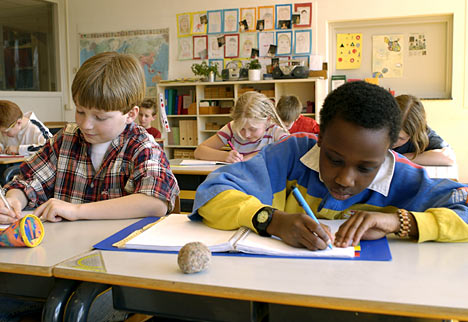
A hypothetical zebra. Too black for the white kids, and too white for the inner city Black kids. What is the station of the Black child who grows up in predominately white populated suburban areas? How do they develop a healthy racial identity?
I grew up in Johnson County, a predominately white suburban area in Kansas. For the first 14 years of my life, I was surrounded with friends, classmates, and teammates that looked absolutely nothing like me. My highschool graduating class had roughly 400 students but only 5-10 were African-American. While some may argue that this equipped me for the real world, or taught me how to co-exist and adapt to other races, I often times felt alone and out of place.
The Black kids from the predominately Black populated inner city told me that I talked funny, that I was trying to act white, and made fun of how I dressed. It confused me because I was simply being me. How was I supposed to be a “real Black” person? I wasn’t sure what that sounded like, looked like, or act liked. Although I had my Black parents as an example of what being Black was, I wanted an example in the form of someone my own age. Just as Taco Bell is considered inauthentic Mexican food, I too felt inauthentic, a generic version of “Black.” Was I supposed to be wearing FUBU (which was popular at the time), wear my hair in cornrows, know all the lyrics to the latest rap songs, have a “Black accent,” and use slang? Was the fact that I wore Abercrombie here and there, had several pop songs burned on a CD, and got my hair styled in a plain press making me less Black?
On the other hand, I felt like a square peg trying to fit into a round hole with my white peers. Getting stared down during readings of Huckleberry Finn was more than uncomfortable. The horrible off-handed “compliments” such as “You are pretty for a Black girl,” and being told that I was different from the other Blacks, because I wasn’t “ghetto” made me feel all the worse. Then there was that strange feeling when my teachers did not understand why I was reluctant to participate in the swimming portion of our P.E. class. I was clearly aware I was Black and I was happy with that, but why did I feel so different?
What can be done to help Black children everywhere who are in the same predicament have a healthy racial identity? The last thing we need is confused Black children turning to hip-hop music videos and the media to try to figure out how the world thinks they should be “Black.”
1. Parental Cheerleaders: The answer is to have at least one parental figure who is instilling the idea in them that NO ONE, black or white, can take away your personhood or make you conform to their idea of who you are. Just like in the movie “The Help,” someone needs to be telling Black children on a regular basis “You is kind, you is smart, you is important,” not just by word but by deed.
2. Organizational Involvement: In addition, it is important to get them involved in various positive Black organizations. It is through organizations like Jack and Jill and NAACP, that I met some of my best friends and found dates to dances. Taking dance classes at a well acclaimed Black dance school and attending a Black church were other outlets available to me. By being involved in all the aforementioned, I became acquainted with children who were going through the same identification dilemma as me. It was through many of these organizations that I learned about historically Black institutions and made the decision to attend Xavier University of Louisiana.
While I am aware that not everyone has all the options I had, it is the job of parents to make sure their children are exposed to other children doing positive things that look just like them. However it is done, the Black suburban child needs to be taught that there is no “right” way to be Black. Just as we come in all shades of brown, we come in all different types of personalities and backgrounds.

About Theresa Sanders
Theresa Sanders is a young up-and-coming creative writer. Her thought provoking and uninhibited work can be found on her shock topic discussion blog “Y SUGARCOAT?” (http://www.ysugarcoat.com). While she received a Bachelor’s degree in Biology from the well acclaimed Xavier University of Louisiana, she is passionate about writing and turning her hobby into a career. Her work is often featured as a guest segment on the radio show H2Flow on WAEC Love 860 AM radio on Saturday’s from 4pm-6pm EST. For Theresa, writing is her form of iconography and a way she can interact and communicate with the world.
Mail | Web | Twitter | Facebook | More Posts (3)
Sharice Richards
January 27, 2012 at 5:06 pm
I really like this article especially your two suggestions on how to help black children develop a healthy racial identity. I never understood how a person could have African American ancestry and know little about their people, history or culture. As you said we come in all different types of personalities but you still can know your culture and the history of your people.
Ann
January 27, 2012 at 11:14 pm
This article is very insightful as well as being instructive. Thank you for helping others to see that dignity, self-awareness, and self-respect are the most important qualities a parent can instill in their children.